

Projects of AG Inverse Problems and Imaging
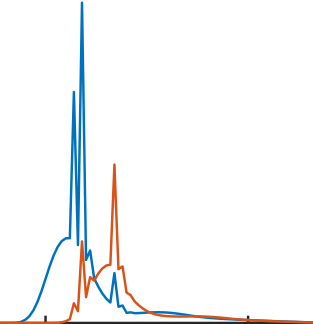 Theory and Algorithm for Multispectral Computed Tomography
Multispectral computed tomography (MSCT) enables the differentiation of materials based on their spectral X-ray absorption – a significant advancement over conventional CT. This project develops a mathematically rigorous theory and stable, efficient reconstruction algorithms to address the challenges of ill-posed inverse problems. Regularization, iterative methods, and data-driven approaches, including machine learning, are integrated to enhance performance. Algorithms are validated on real and synthetic data and implemented in existing software frameworks. The goal is to advance MSCT into a reliable, practical tool for applications in medicine, materials science, and security.
Time period:
01.06.2026 - 31.05.2029
Leadership: Prof. Dr. Dirk Lorenz
 GP4MED: Gaussian Process-based Approaches for Efficient Solution of Dynamic Inverse Problems in Medicine
Medical imaging is a crucial component of modern medicine. By using imaging techniques such as computed tomography (CT), magnetic resonance imaging (MRI), and electrocardiography (ECG), doctors and researchers can gather detailed information about the human body and improve the diagnosis and treatment of diseases. Despite the advances in medical imaging, there are still many challenges to overcome. One of the biggest challenges is solving dynamic inverse problems, which occur in many medical applications.
Time period:
01.02.2026 - 31.01.2029
Leadership: Prof. Dr. Dirk Lorenz
 Wasserstein Regularization in Inverse Problems and Optimal Control
The project "Wasserstein Regularization in Inverse Problems and Optimal Control" aims to replace the Radon norm in optimal control problems and inverse problems with the Wasserstein distance to a given prior of the optimal solution. This distance is continuous with respect to weak-* convergence, providing an improved approximation of optimization problems.
Time period:
01.01.2026 - 31.12.2028
Leadership: Prof. Dr. Dirk Lorenz
 #MOIN - LC-MS Peak Analyzer
In recent decades, Bremen has established itself as a major center of mass spectrometry. Imaging mass spectrometry in particular has proven to be a promising technology for the future and has triggered dynamic economic growth in the region. Two of the five largest equipment manufacturers in the field of mass spectrometry, Bruker Daltonics and Thermo Fisher Scientific, have located their research and development departments in Bremen.
The Center for Industrial Mathematics (ZeTeM) at the University of Bremen has maintained close cooperation with Bruker for over 20 years, which has led to a large number of advanced joint research and development projects.
Time period:
01.05.2024 - 31.07.2025
Leadership: Prof. Dr. Dirk Lorenz
 Automated data-driven damage detection
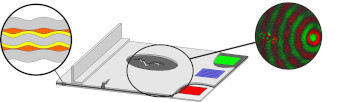
The overall objective of the FOR 3022 is to gain a thorough understanding of an integrated structural
health monitoring (SHM) system in laminates with layers of large impedance difference using guided
ultrasonic waves (GUW) under real-world conditions. In this subproject we focus on automated damage
detection and merge the expertise from mathematics and computer science. As the basis for the automated methods serve mathematical
models built upon physical principles, mathematical tools to make the models computationally tractable and machine learning methods. Consequently, WG Lorenz (working on physics-informed
neural networks (PINNs)) and WG Gräßle (working on model order reduction and data assimilation) join WG Bosse (working on machine learning method) in this project.
Time period:
01.10.2023 - 30.09.2026
Leadership: Prof. Dr. Dirk Lorenz
 Training Data Driven Experts in Optimization
The main goal of TraDE-OPT is the derivation and analysis of efficient optimization algorithms for solving data-driven problems with a wide range of applications, e.g. in social sciences, economics or healthcare. Data is now produced by numerous different sensors in industry, in vehicles, scanners, on the internet or by mobile devices and the production of data has virtually exploded. One of the new challenges is to extract interpretable and useful information from this data. A central tool for this is (especially convex) optimization.
Project webseite
Time period:
01.06.2020 - 01.12.2024
Leadership: Prof. Dr. Dirk Lorenz
 Mathematics for Machine Learning for Graph-Based Data with Integrated Domain Knowledge
The aim of this project is to further develop and analyze deep neural networks for industrial problems that allow existing domain knowledge to be incorporated into the architecture of the networks. Such a hybrid approach can capitalize on the complementary respective strengths of end-to-end learning approaches and "a priori models/rules". This approach promises substantially more efficient solutions for many fields of application. For example, significantly less data is required or the predictions of the ML model are consistent with existing knowledge.
Time period:
01.04.2020 - 31.12.2023
Leadership: Prof. Dr. Dirk Lorenz