

Durchsatzsteigerung der Laser-induzierten Stoßwellen-Eindringprüfung mithilfe einer angepassten Messstrategie und Datenauswertung auf Basis des maschinellen Lernens
| Arbeitsgruppe: | AG Modellierung und Wissenschaftliches Rechnen |
| Leitung: | Prof. Dr. Andreas Rademacher ((0421) 218 63831, E-Mail: arademac@uni-bremen.de) |
| Bearbeitung: |
Theresa Sauerland
Marie Kolumbe ((0421) 218-63834, E-Mail: kolumbe@uni-bremen.de) |
| Projektpartner: | |
| Laufzeit: | 01.12.2024 - 30.05.2027 |
 Zur Beschleunigung des Innovationsprozesses in der Werkstoffentwicklung ist es entscheidend, geeignete Konstruktionswerkstoffe schneller und effizienter zu identifizieren. Hochdurchsatzverfahren bieten hierfür ein vielversprechendes Instrument: Sie erfassen leicht messbare Kennwerte, sogenannte Deskriptoren, die in physikalischem oder statistischem Zusammenhang mit bekannten Werkstoffeigenschaften stehen.
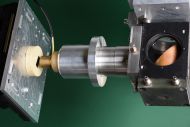
Im Rahmen dieses Projekts wird die laserinduzierte Stoßwellen-Eindringprüfung (LiSE) weiterentwickelt. Dabei erzeugt ein TEA-CO₂-Laser reproduzierbar Stoßwellen, die einen Indenter innerhalb von Mikrosekunden in die Materialprobe treiben. Ziel ist es, den Durchsatz dieses Verfahrens signifikant zu steigern.
Hierzu wird eine datengestützte Auswertungsmethodik auf Basis des maschinellen Lernens entwickelt, mit der aus den Messdaten gezielt auf relevante Materialparameter geschlossen werden kann. Im ersten Schritt sollen neue, aussagekräftige Deskriptoren identifiziert und validiert werden. Das Eindringverhalten wird dazu als Kontaktproblem modelliert und mithilfe einer stabilen, gemischten Finite-Elemente-Methode (FEM) simuliert, dabei werden die zu bestimmenden Materialparameter in die Simulation integriert. Es kommen effiziente und parallelisierte Lösungsverfahren zum Einsatz. Die Verwendung von lokal verfeinerten FE-Gittern erhöht die Simulationsgenauigkeit. Aufbauend auf der Simulation können die unbekannten Werkstoffeigenschaften mittels numerischer Parameteridentifikation bestimmt werden. Um die rechenaufwändige Bestimmung der Materialparameter aus den Messdaten zu beschleunigen, kommen neuronale Netze zum Einsatz, die mit den gewonnenen Daten aus der Simulation trainiert werden. Darüber hinaus werden verschiedene auf neuronalen Netzen basierende Ansätze zur Auswertung der Messdaten entwickelt und im Hinblick auf Genauigkeit und Recheneffizienz miteinander verglichen.
Zur Beschleunigung des Innovationsprozesses in der Werkstoffentwicklung ist es entscheidend, geeignete Konstruktionswerkstoffe schneller und effizienter zu identifizieren. Hochdurchsatzverfahren bieten hierfür ein vielversprechendes Instrument: Sie erfassen leicht messbare Kennwerte, sogenannte Deskriptoren, die in physikalischem oder statistischem Zusammenhang mit bekannten Werkstoffeigenschaften stehen.
Im Rahmen dieses Projekts wird die laserinduzierte Stoßwellen-Eindringprüfung (LiSE) weiterentwickelt. Dabei erzeugt ein TEA-CO₂-Laser reproduzierbar Stoßwellen, die einen Indenter innerhalb von Mikrosekunden in die Materialprobe treiben. Ziel ist es, den Durchsatz dieses Verfahrens signifikant zu steigern.
Hierzu wird eine datengestützte Auswertungsmethodik auf Basis des maschinellen Lernens entwickelt, mit der aus den Messdaten gezielt auf relevante Materialparameter geschlossen werden kann. Im ersten Schritt sollen neue, aussagekräftige Deskriptoren identifiziert und validiert werden. Das Eindringverhalten wird dazu als Kontaktproblem modelliert und mithilfe einer stabilen, gemischten Finite-Elemente-Methode (FEM) simuliert, dabei werden die zu bestimmenden Materialparameter in die Simulation integriert. Es kommen effiziente und parallelisierte Lösungsverfahren zum Einsatz. Die Verwendung von lokal verfeinerten FE-Gittern erhöht die Simulationsgenauigkeit. Aufbauend auf der Simulation können die unbekannten Werkstoffeigenschaften mittels numerischer Parameteridentifikation bestimmt werden. Um die rechenaufwändige Bestimmung der Materialparameter aus den Messdaten zu beschleunigen, kommen neuronale Netze zum Einsatz, die mit den gewonnenen Daten aus der Simulation trainiert werden. Darüber hinaus werden verschiedene auf neuronalen Netzen basierende Ansätze zur Auswertung der Messdaten entwickelt und im Hinblick auf Genauigkeit und Recheneffizienz miteinander verglichen.